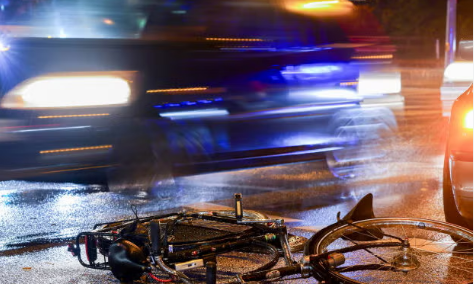
Mobile Hit-and-Run Case Heads to Grand Jury Just Months Before Tougher Penalties Take Effect
A judge ruled Monday that prosecutors have enough evidence to send James Delano Howard’s case to a Mobile County grand jury. Howard, 27, is charged with leaving the scene of an accident with injuries after a Dodge Durango struck Rebecca Carter while she was riding her bicycle on Halls Mill Road last November.
Carter’s mother, Dalene Carter, sat through Monday’s preliminary hearing and later told FOX10 News that the testimony brought back everything the family went through in the hospital. She and her husband drove from their home in middle Tennessee to be there.
What Happened on Halls Mill Road
Carter had just turned onto Halls Mill Road, heading toward Oliver Street, when the Durango struck her bicycle a little after 9 p.m. on Nov. 13. Mobile police Detective Travis Sentelle testified that the impact threw Carter 40 feet. She suffered a traumatic brain injury, six broken ribs, six broken vertebrae, two punctured lungs, and had to have her spleen removed.
Sentelle testified that a witness saw the vehicle hit the bicycle and keep driving, and that surveillance footage from two nearby businesses backed that up. Investigators pulled a license plate from the video and traced it to Howard. Debris recovered near the crash was, in Sentelle’s words, an “absolute match” to Howard’s vehicle. Howard told investigators he believed he’d hit something metal but didn’t think there was damage until he got home.
Howard’s defense attorney, Christine Hernandez, said an investigator told her the bicyclist “darted out” into traffic, and that testimony so far hasn’t established Howard knew he’d hit a person. That question, along with everything else, will now go before the grand jury.
Mobile County District Attorney Keith Blackwood put it plainly: “When you’re in a crash of any kind while driving, you have a duty to stop and render aid. That didn’t happen here,” he said.
Why the Timing of this Case Matters
Howard is charged under Alabama’s current law, which makes leaving the scene of an accident with injuries a Class C felony, carrying one to 10 years in prison. That’s about to change.
Starting Oct. 1, 2026, the Devinee Rooney and John Wesley Holt Safe Streets Act takes effect, elevating that same offense to a Class B felony with a sentencing range of two to 20 years. The law also opens the door to court-ordered restitution for victims and, for the first time, makes them eligible for compensation through a state fund.
Blackwood, who helped write the bill, pushed for it specifically to close what he called a loophole: cases just like Howard’s, where a driver fled after hitting someone and the injuries were catastrophic but not fatal. Because Carter was hurt in November, months before the law takes effect, her case falls under the older, lighter penalty structure. Had the crash happened after October 1, 2026, Howard would be facing a different range of consequences entirely, and the Carter family would qualify for state compensation they currently can’t access.
That gap is worth sitting with. Alabama’s hit-and-run laws have historically drawn a sharper line between injury and death than the actual harm often justifies. A driver who causes six broken vertebrae, a punctured lung, and a traumatic brain injury, then leaves without checking on the person he hit, has done something the law is only now catching up to.
What the Law Actually Requires of Drivers
Alabama Code has long required any driver involved in a crash resulting in injury or death to stop immediately, provide reasonable assistance, and exchange information with anyone involved. That duty doesn’t depend on who caused the crash or how minor the driver believes the impact was. Sentelle testified that Howard didn’t realize any damage occurred until he got home — but the law doesn’t excuse someone for not stopping to check.
This is also where “hit-and-run” gets legally distinct from an ordinary crash. A driver who causes an accident and stays, even one who’s clearly at fault, is in a fundamentally different legal position than one who leaves. Fleeing creates a criminal case from a civil matter, and it can also complicate a victim’s ability to recover damages if the driver isn’t identified quickly, which is exactly why investigators leaned so heavily on surveillance footage and license plate data here.
A grand jury will now decide whether to indict Howard. Separately, Judge George Zoghby will rule on whether Howard gets his vehicle back. Hernandez argued he needs it for work, while Blackwood’s office wants to keep it as evidence until testing is complete.
Rebecca Carter, meanwhile, is still living with injuries that her family says have permanently changed her life. Cases like hers are a reminder that the law’s timeline and a victim’s timeline rarely move together. If you or someone you love has been hurt in a hit-and-run crash in the Mobile area, Greene & Phillips can help you understand what options exist under the law as it stands today, not just what it will look like in October. Call or come by anytime.