Should I Still Talk to a Lawyer If I Was Partially at Fault for a Car Accident in Alabama?
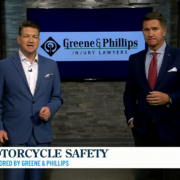
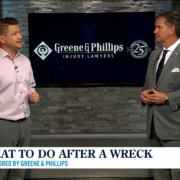
Yes. If you think you may have been partially at fault for a car accident in Alabama, you should still talk to a lawyer before you decide you don’t have a case. David Greene joined FOX10’s Studio 10 to explain why a feeling of fault isn’t the same as legal fault, why the police report isn’t the final word, and why Alabama’s contributory negligence law makes it worth having someone independently check the facts before you count yourself out.
What Does It Mean to Be “Partially at Fault” for an Accident?
Feeling partly to blame for a wreck and being legally at fault for it are two different things, and only one of them determines whether you have a claim.
Most people who wonder about this aren’t confused about right and wrong. They were going a little over the limit, they hesitated for a second, or they got a citation at the scene, and now they’re second-guessing whether that means the crash was on them. David Greene draws a clear line here: feeling like you might have contributed to an accident is not the same thing as being legally responsible for causing it. Those are two different questions, and only one of them determines whether you have a claim.
Does an Accident Report Decide Who Was Legally at Fault?
No, and this catches a lot of people off guard. An accident report carries weight in people’s minds, but it generally isn’t admissible as evidence at trial to prove who caused a wreck. The officer who writes it up almost always arrives after the collision already happened. They didn’t see it. Their conclusions are based on whatever they can piece together from the scene, which sometimes means guesswork about skid marks, vehicle position, or a driver’s version of events that may not hold up under closer review.
When Greene & Phillips investigates a case, the team can go further than what made it into that report. That includes photographs and video from the scene, statements from witnesses, a close look at vehicle damage, available records, and, when the case calls for it, an accident reconstruction expert who can rebuild what actually happened.
Why Does Alabama’s Contributory Negligence Law Make This So Important?
Alabama is one of a small handful of states that still follows contributory negligence, a rule that can bar an injured person from recovering anything if they’re found even 1% at fault, no matter how badly the other driver was hurt. Most states use some version of comparative negligence, where shared fault just reduces the payout. Alabama doesn’t work that way, and insurance adjusters know it. That’s exactly why they’ll seize on any hint of shared fault, however small, when they’re deciding whether to pay a claim at all.
That’s also why it matters so much to have someone look at the facts independently before you accept a fault determination at face value. A finding that could otherwise be argued down, corrected, or shown to be based on incomplete information can mean the difference between a fair recovery and nothing.
We’ve covered Alabama’s rules on filing deadlines in more detail in our post on the statute of limitations for injury claims, and our FAQ page goes into the contributory negligence doctrine as well if you want the fuller legal picture.
Can a Fault Determination Change After a Closer Look?
Yes, and it happens more often than people expect. Greene & Phillips regularly handles cases where the client came in believing, or having been told, that the accident was their fault, and the investigation turned up something different. Video that wasn’t in the original report. A witness the officer never spoke with. Damage patterns that don’t line up with the other driver’s account. Any of these can shift how a case gets evaluated, and in some cases the finding gets corrected entirely.
What Does “We Believe You” Mean in a Situation Like This?
It means the starting point is listening to you, not to whatever a report or an insurance adjuster says happened. You were there. You know what you saw and what you did. An officer who showed up afterward, or an adjuster who’s never seen the scene, doesn’t have that. Greene & Phillips takes what a client tells them seriously, then goes and checks it against the evidence rather than assuming the paperwork already settled the question.
Do I Need an Appointment to Talk to a Lawyer at Greene & Phillips?
No. You can come by either office without scheduling ahead of time, and the case evaluation is always free. If you think you might have shared some blame for an accident, don’t rule yourself out before you’ve had a chance to have someone look at what actually happened. Come in, tell us what you remember, and let us evaluate it. Greene & Phillips works on contingency, so there’s no fee unless we recover for you.
Call or text 251-478-1115 in Mobile or 205-918-7800 in Birmingham, or reach us through our contact page.