Truck Accidents at the Wallace Tunnel: What to Know If You’re Hurt in One
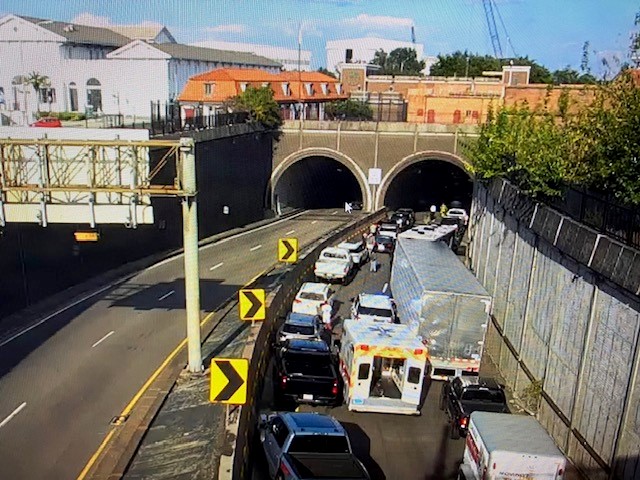
If you were in a truck accident at or near the Wallace Tunnel on I-10 in Mobile, you’re dealing with a stretch of road that’s seen more than one commercial-truck crash over the years. That’s useful context for your claim, and it’s also worth knowing what to do next.
A Familiar Stretch of Road
The Wallace Tunnel carries I-10 under the Mobile River between downtown Mobile and the Bayway. It’s a heavily traveled freight corridor, and local news has reported a handful of separate truck-involved incidents there over the years: an overturned 18-wheeler that closed the westbound bore, and a lumber truck rollover that blocked the eastbound lanes and injured its driver, among others.
A few things about the corridor are worth understanding if you’re trying to make sense of what happened:
- No shoulder inside the tunnel, so a truck that needs to slow or stop has fewer options than it would on open highway.
- A merge point at the tunnel entrance, where Bayway, Causeway, and downtown traffic come together.
- High commercial truck volume, since I-10 is a primary Gulf Coast freight route and the Wallace Tunnel handles most of that traffic (the nearby Bankhead Tunnel is often closed for events).
None of that changes who was at fault in your crash. Fault still comes down to what each driver did: following distance, speed, attention, vehicle condition. But when a crash happens at a spot with known traffic conditions like these, that context is often part of a fuller picture, especially in a multi-vehicle crash.
What Makes Truck Crashes at the Wallace Tunnel Different From an Ordinary Fender-Bender
A collision involving a tractor-trailer or other commercial vehicle carries different evidence and different rules than a car-on-car crash:
- Federal Motor Carrier Safety Administration (FMCSA) rules govern the driver’s hours of service, and electronic logging device (ELD) data can show whether the driver was fatigued or over their legal driving hours at the time of the crash. Some vehicle types and short-haul operations fall under FMCSA exemptions that limit how much log data applies: this needs to be verified case by case before any hours-of-service claim is made.
- The trucking company, not just the driver, may share responsibility for cargo loading, maintenance, dispatch pressure, or hiring and training practices.
- Evidence disappears fast. Trucking companies and their insurers often send investigators to the scene within hours. Skid marks, debris, and vehicle positioning inside a tunnel get cleared as soon as the road reopens, since ALDOT and Mobile police prioritize getting I-10 moving again.
- Multiple insurance layers are often involved: the driver’s policy, the motor carrier’s commercial policy, and sometimes a cargo owner’s policy, depending on who’s at fault.
What to Do If You’re in a Wallace Tunnel Truck Crash
- Get to safety if you’re able to. There’s no shoulder inside the tunnel. If your vehicle is drivable and it’s safe to do so, try to clear the bore rather than stopping inside it.
- Call 911. Mobile Police and Alabama State Troopers both respond to tunnel crashes, and a police report is essential for a truck-crash claim.
- Get medical care, even if you feel fine. Adrenaline masks pain, and documentation tying your injuries to the crash matters later.
- Don’t discuss fault with anyone but police: not the other driver, not a trucking company representative who may call you afterward.
- Preserve what you can. Photos of vehicle positions, damage, and the tunnel entrance/exit if you’re able to safely take them.
- Talk to an attorney before giving a recorded statement to a trucking company’s insurer. Commercial insurers move fast, and an early recorded statement can be used against you later.
FAQ: Wallace Tunnel Truck Accidents
Is the Wallace Tunnel more dangerous for trucks than other parts of I-10? It’s a stretch with some notable traffic conditions (no shoulder, a merge point at the entrance, heavy commercial volume), and it’s had more than one documented truck crash over the years. Alabama Law Enforcement Agency (ALEA) crash data for this specific segment would be needed to say how its crash rate compares to other stretches of I-10.
Who is liable if a truck crash in the tunnel involves multiple vehicles? Liability depends on the specific facts: following distance, speed, mechanical condition of each vehicle, and whether any driver violated traffic law or FMCSA regulations. Multi-vehicle crashes often involve shared fault among more than one party.
What if the truck driver says the crash wasn’t their fault? That’s common, and it’s also why police reports, ELD data, and dashcam or ALGO traffic camera footage matter. An attorney can request and preserve this evidence before it’s gone.
Does it matter if the truck was hauling a specific type of cargo, like lumber or fuel? Yes. Cargo type affects load securement rules, spill/hazmat response requirements, and sometimes which regulations and inspection records apply.