Who Pays If You’re Hurt as an Uber or Lyft Passenger in Alabama?
More than one insurance policy may be responsible. Which one pays depends on who caused the wreck and what the driver’s app showed when it happened.
If your Uber or Lyft driver caused the crash, the claim starts with the driver and the insurance that covers rideshare trips. If another driver hit you, that driver’s insurer is usually first in line, though your rideshare driver may still share some of the responsibility.
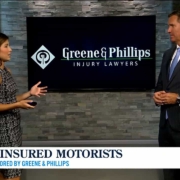
J. David Greene of Greene & Phillips Injury Lawyers joined WKRG News 5’s Judge Knows to explain how these claims get sorted out. Judge, the firm’s chocolate Lab, lounged on set for the segment.
Who Pays If My Uber or Lyft Driver Caused the Accident?
The driver is responsible for a wreck they cause, and David said rideshare drivers understand that going in. What sets these cases apart from a typical car accident is the insurance standing behind the driver.
Alabama law sets minimum coverage for rideshare trips. Under Ala. Code § 32-7C-2, a driver engaged in a prearranged ride must have at least $1,000,000 in primary liability coverage for death, bodily injury, and property damage. That coverage can come from:
- the driver’s own policy,
- the rideshare company’s policy, or
- a combination of the two.
The statute also says no contract between the company and its drivers or riders can reduce those requirements.
So there’s coverage set aside for exactly this situation. The work lies in three areas:
- figuring out which insurance company is responsible,
- holding that company responsible, and
- documenting your injuries so the claim reflects what you’ve actually been through.
A passenger shouldn’t have to sort that out alone. We covered the basics of rideshare accidents on Studio 10, including what happens when a rideshare driver hits someone outside the car.
Does It Matter What the Driver Was Doing in the App?
It can matter a great deal. The coverage Alabama requires changes with the driver’s app status at the moment of the crash:
- Logged off: The rideshare insurance rules generally don’t apply. The driver’s personal auto policy is the main source of coverage.
- Logged on and waiting for a request: The statute requires primary coverage of at least $50,000 per person and $100,000 per incident for bodily injury, plus $25,000 for property damage.
- On a ride: The $1,000,000 requirement applies.
If you were sitting in the back seat, you’d expect the driver to be on a ride. But drivers and insurers don’t always agree about what happened. When a driver disputes being on a trip, the app’s records can settle the question. Those records are usually obtained through discovery once a claim is underway.
The information that tends to matter includes:
- trip status and timestamps,
- GPS location, and
- whether the driver was logged in to one platform or more than one.
Much of it sits on the company’s servers. Your phone holds part of the picture too, so screenshot your trip details and receipt as soon as you’re able.
What If Another Driver Caused the Crash While I Was in the Uber?
Then the claim starts out much like any other wreck. If another driver ran a light and hit your rideshare, that driver can be held responsible. Their insurance company is generally where the claim begins.
That doesn’t always settle it. Depending on the facts, the driver of the car you were riding in may share responsibility, for example if they were speeding or looking at their phone when the other car came through. David noted that because you paid for the ride, your rideshare driver can be held responsible in many cases.
Paying for the ride matters more in Alabama than in most states. Alabama’s guest statute, Ala. Code § 32-1-2, says a driver generally isn’t liable to a passenger riding without payment unless the driver’s conduct was willful or wanton. A friend giving you a lift home falls under that rule. The statute is limited to riders transported without payment, so a paying rideshare passenger generally isn’t held to that higher standard.
Every additional driver can mean another insurance policy. A lawyer can review all of them, along with your own auto policy. Your uninsured motorist coverage may come into play if the at-fault driver didn’t carry enough.
What Should I Do Right After a Rideshare Accident?
David gave three steps on air:
- Call 911 so police come out and document the scene.
- Get medical treatment even if you feel fine, because some injuries take time to show up.
- Talk to a lawyer before you deal with any insurance company.
A few other things help:
- Take photos if you’re able to.
- Save your trip information from the app.
- Report the crash through the app, sticking to basic facts.
If an adjuster calls asking for a recorded statement, you don’t have to give one on the spot. Read our guide on giving a statement to the other driver’s insurance company before you talk to anyone.
Do I Need a Lawyer for an Uber or Lyft Accident Claim?
A rideshare claim can involve several sources of coverage, and there may be a dispute over what the app showed. That makes it more complex than a typical car wreck. The policies that may be involved include:
- the driver’s own policy,
- the rideshare company’s coverage, and
- the other driver’s insurer.
David put it plainly: “It’s very complex. You need a lawyer.” The insurance companies on the other side will have lawyers of their own.
You don’t need an appointment to ask questions. Stop by either office or give us a call, and someone will talk with you about what happened.
The consultation is free. Greene & Phillips handles personal injury cases on a contingency fee. If there’s no recovery, you owe no attorney’s fee and no case expenses. If the firm does recover compensation for you, the fee and case expenses are paid out of that recovery.
Call Greene & Phillips Injury Lawyers at 251-478-1115 (Mobile) or 205-918-7800 (Birmingham), no appointment needed. You can also reach us through our contact page.